
Sex Offender Checks in Sacramento County
The California Megan's Law Website, maintained by California DOJ, is the official public search for Sacramento County. Penal Code section 290.46 controls disclosure. Local police and sheriff agencies register residents and send data into the state system, while DOJ presents the fields state law permits the public to see.
A registry match is not a full rap sheet. It covers registrable offenses and approved profile data, not unrelated crimes. Names, ages, and addresses alone can cause a mistaken identification, so compare photographs and other disclosed traits. DOJ warns that information can change because it comes from registrants and local agencies.
Sacramento Megan's Law Disclaimer
Before a Sacramento County registry search, the user must read and accept the Megan's Law disclaimer. It explains limited disclosure and warns against harassment or crime. The official disclaimer is part of the search.
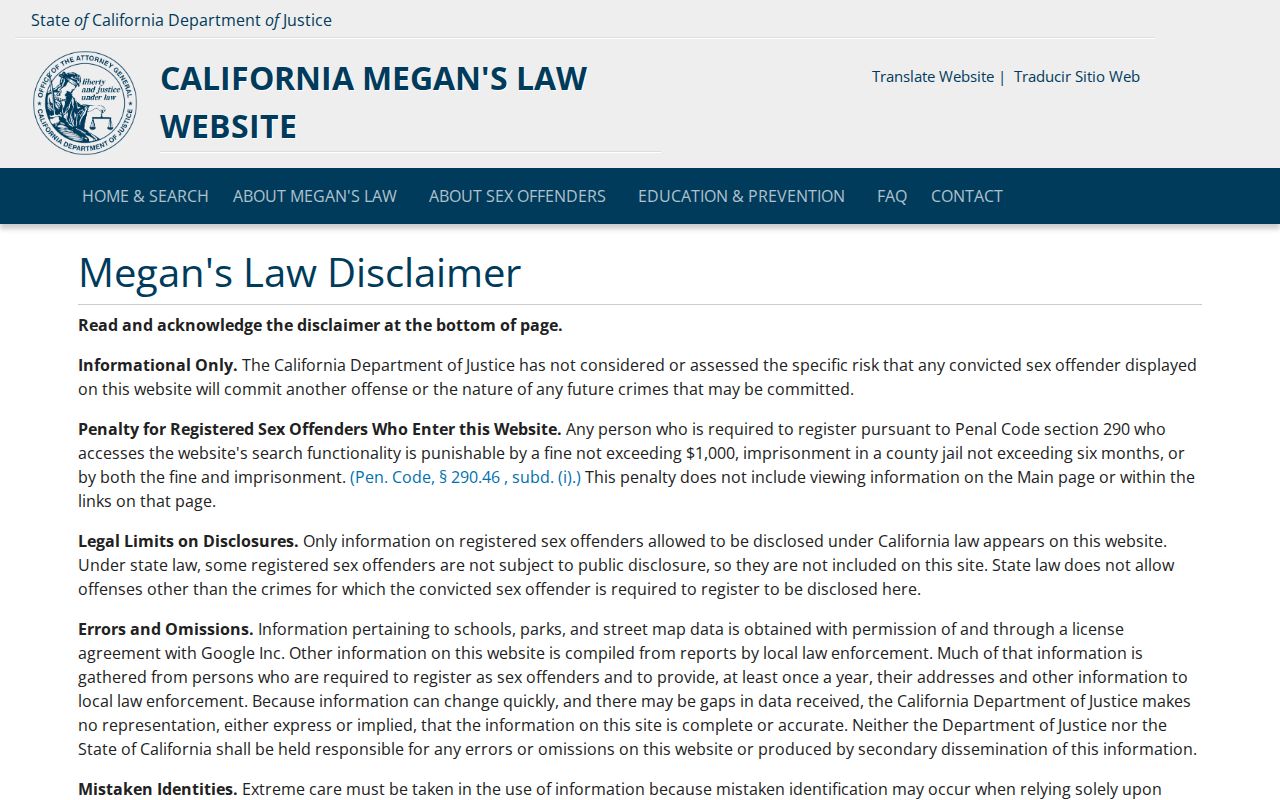
The acknowledgement opens search tools while preserving lawful-use limits for every result.
How to Search California Megan's Law
Choose the path that fits the safety question. A name helps locate a known person, while address, ZIP, city, county, map, or list controls support neighborhood awareness. Select Sacramento County when offered, and never assume that one weak identifier proves a match.
- Open the official registry and accept the required disclaimer.
- Choose name or geographic search and enter useful criteria.
- Narrow place results by Sacramento County, city, ZIP, address, or map.
- Open a profile and compare all disclosed identifiers before relying on it.
| Field Label | Type | Required | Notes |
|---|---|---|---|
| Disclaimer | Button | Yes | Must agree before search. |
| Name | Text | No | Individual search path. |
| Address or location | Text/map | No | Geographic search. |
| City or ZIP | Filter | No | Narrows local results. |
| County | Filter | No | Select Sacramento County. |
Sacramento Registry Search View
The official Megan's Law search provides the state layer for Sacramento County and is the source for this assigned image.
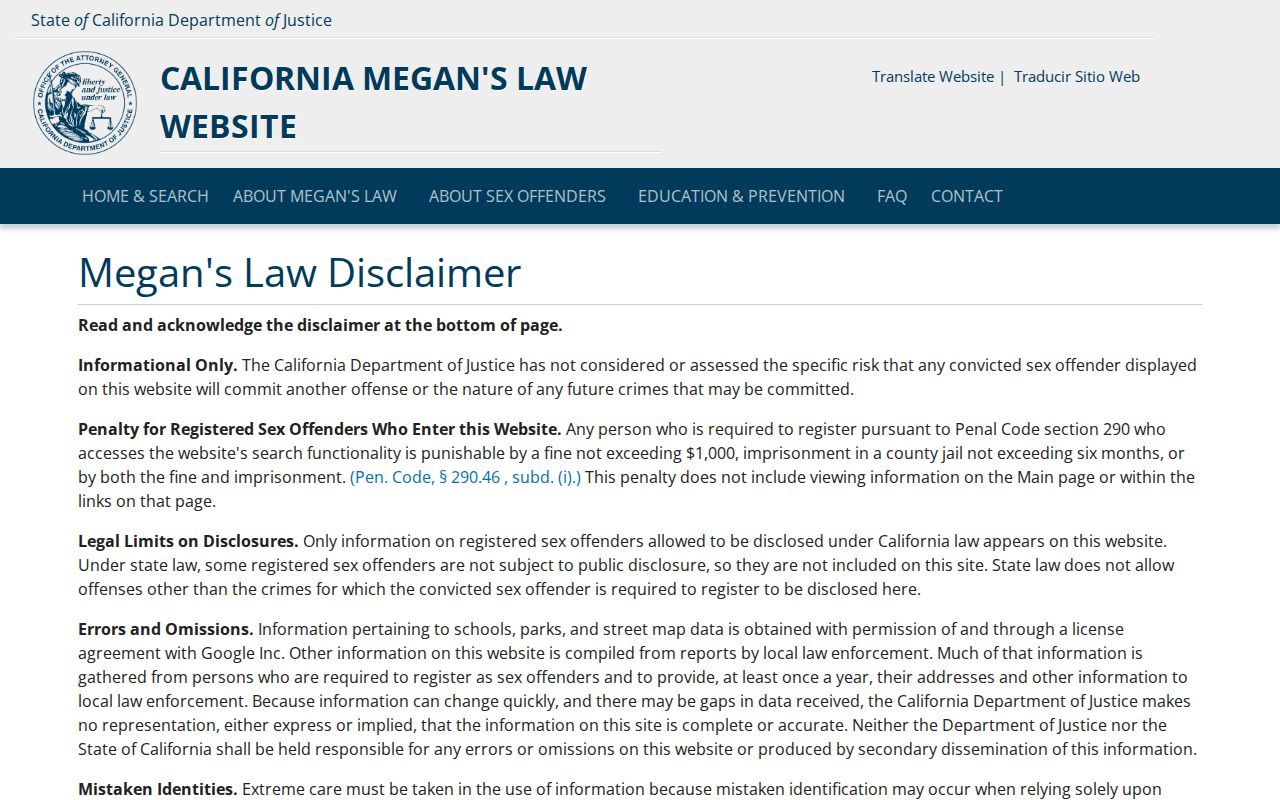
Use map and list choices as starting points, then read the full profile and disclosure limits.
Inside a Registry Profile
A profile can show enough detail to distinguish people and understand the registrable offense. Availability depends on California law. Compare the image, physical description, location, aliases, and offense fields together. DOJ says tier designation is not posted on Megan's Law.
| Name and Aliases | Disclosed identity names. |
|---|---|
| Photo and Description | Image, age, gender, race, marks, and tattoos when disclosed. |
| Address or Location | Residence or location allowed by law. |
| Registrable Offense | Registration crimes, not full criminal history. |
| Status | Registration or compliance data when displayed. |
| Other Details | Vehicle or related fields when public. |
Why Sacramento Profiles May Be Missing
Some registered people are not subject to public disclosure. A blank Sacramento County result does not prove no registration exists, and the registry cannot reveal unrelated offenses. The DOJ Megan's Law explanation describes that narrower public layer.
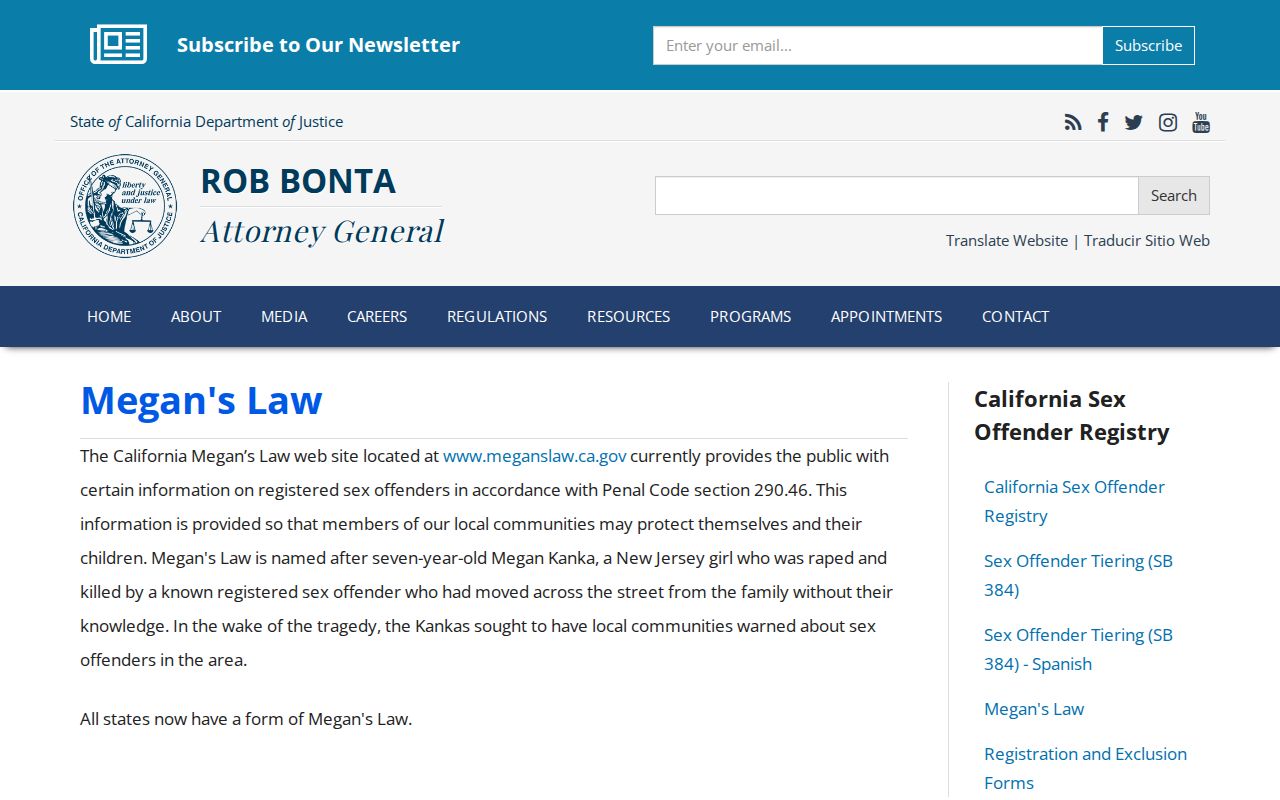
The state overview shows why law-enforcement registration files can be broader than public profiles.
Sacramento Registry Data Limits
California DOJ receives registry information from local law enforcement and from registrants. That flow means an address, status, or other fact can change before every system reflects it. The disclaimer tells users to expect possible gaps and to avoid identification based only on name, age, or address. A photo and physical details, when disclosed, provide a stronger comparison.
The site also separates registration data from general criminal history. California law does not permit unrelated offenses to be displayed through Megan's Law. A public user therefore should not read the profile as a complete account of every arrest, charge, or court result. For a Sacramento County public-safety concern, use the profile for the narrow registration purpose it was designed to serve, then contact the responsible local agency if the location or status appears wrong.
California Registration Levels and Requirements
California DOJ assigns tiers under Penal Code criteria. SB 384 replaced a lifetime-only structure with minimum periods for many people, but eligibility to petition is not automatic termination. Later custody or failure-to-register convictions may extend time. A Sacramento County resident files a termination petition in the county of residence after meeting statutory conditions.
| Level / Tier | Duration | Verification Frequency |
|---|---|---|
| Tier One | Adult 10 years; juvenile 5 years | Local registration duties apply |
| Tier Two | Adult 20 years; juvenile 10 years | Local registration duties apply |
| Tier Three, risk level | May petition after 20 years if eligible | Continues until court relief |
| Tier Three, lifetime | Lifetime | No petition under this process |
| To be determined | Continues until DOJ sets tier | Registration continues |
Correcting Sacramento Registry Information
Report suspected errors to the local registering police or sheriff agency, or email MegansLaw@doj.ca.gov. Local agencies can provide tier notification letters to registrants. Give the exact profile and field believed wrong; do not confront the person shown.
The California registry program page provides the assigned program image.
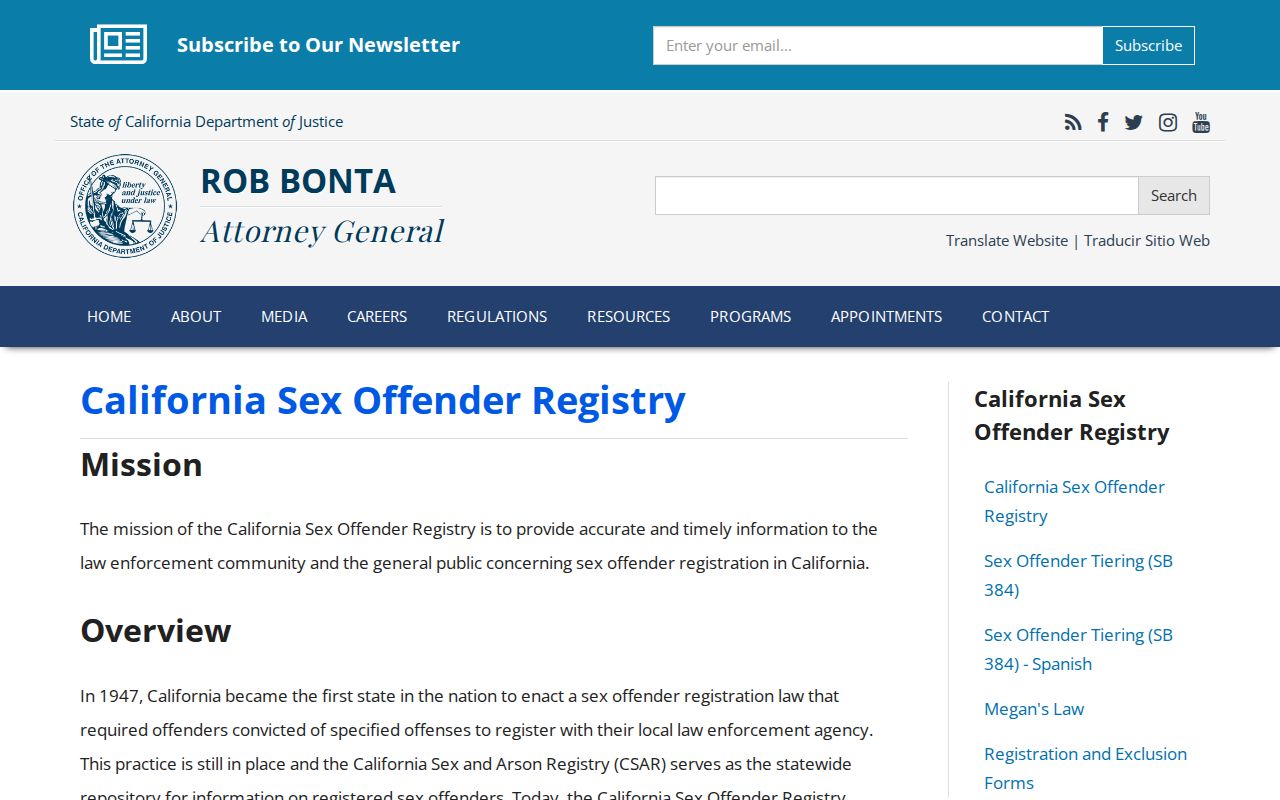
Corrections should move through the agency that supplies or maintains the official data.
Sacramento County Tier Petitions
A minimum registration period does not end a duty by itself. An eligible registrant petitions the superior court or juvenile court in the county where the person resides. For a Sacramento County resident, that means filing in Sacramento County after the minimum period and other statutory requirements have been met. DOJ's tiering FAQ explains that some later custody time or failure-to-register convictions can extend the calculation.
Tier Three based on risk assessment has a possible petition path after 20 years when statutory criteria are satisfied. Tier Three lifetime does not. A tier still being determined continues until DOJ ascertains it. Public searchers should also know that the tier designation itself is not posted on the Megan's Law profile, so apparent visibility or offense text should never be used to guess the assigned tier.
Sacramento Local Registration Agencies
Registration duties are handled through local law enforcement for Sacramento County residents. The local agency verifies and supplies registration information, while California DOJ maintains the state registry and decides the tier under statutory criteria. That division also shapes corrections: an address or local registration fact should be raised with the registering police or sheriff agency, while DOJ accepts registry error reports through its Megan's Law email.
A member of the public should not treat a missing profile as proof of noncompliance. Some registrants are lawfully excluded from public disclosure, and data may lag after a change. Report a specific concern with enough detail for the agency to review it. Do not publish, confront, or attempt to enforce a registration duty yourself.
Community Notification and Lawful Use
Registry data is published solely to protect the public. Penal Code section 290.46(j) creates criminal and civil consequences for criminal or harassing use. Use Sacramento County results for personal, family, and neighborhood safety, and report concerns through law enforcement.
Misuse warning: Penal Code section 290.46(j) forbids criminal or harassing use of registry information and permits criminal prosecution and civil liability.
A registrant who accesses search functionality can face a fine up to $1,000, up to six months in county jail, or both under section 290.46(i). Report suspected noncompliance rather than making direct contact.
NSOPW Beyond Sacramento County
The National Sex Offender Public Website adds a cross-state layer when a safety concern crosses California's border. State rules still control the records, so NSOPW supplements Megan's Law for Sacramento County and other nearby jurisdictions.
Return to California Megan's Law for the source profile and correction channel.