
Checking Criminal History in Sacramento
A sound Sacramento criminal records search follows the event instead of relying on one name query. Sacramento Police Department keeps its own incident and arrest reports. Sacramento County Sheriff maintains custody and booking data. Sacramento Superior Court holds filed charges, hearings, and dispositions. California DOJ offers a fingerprint-based Record Review for a person's own statewide history, not a public name search. Start with a report number, case number, date, and exact name when available.
Each channel answers a different question. The city report explains the police response. The jail entry concerns custody. The court docket shows whether prosecutors filed a case and what happened there. DOJ compiles authorized statewide submissions tied to fingerprints. The order below keeps those distinctions clear.
- Search Sacramento Police NextRequest for previously published records.
- Request the SPD report with the date, location, report number, and involved name.
- Check the Sheriff's inmate system for current custody or a recent booking.
- Use Sacramento Superior Court Public Case Access for a filed criminal case.
- Use California DOJ Live Scan Record Review to inspect your own statewide history.
Sacramento Police NextRequest Records
Sacramento Police NextRequest is the request and tracking channel for records already held by SPD. It is not the place to file a new crime report. A requester describes existing material, supplies contact details for portal messages, and may browse prior published requests. Release still depends on the California Public Records Act and SPD policy GO 320.05. A demand tied to a report number and date is easier to route than a broad request for every record about a topic.
The SPD public-records transparency page is the official source for that city process.
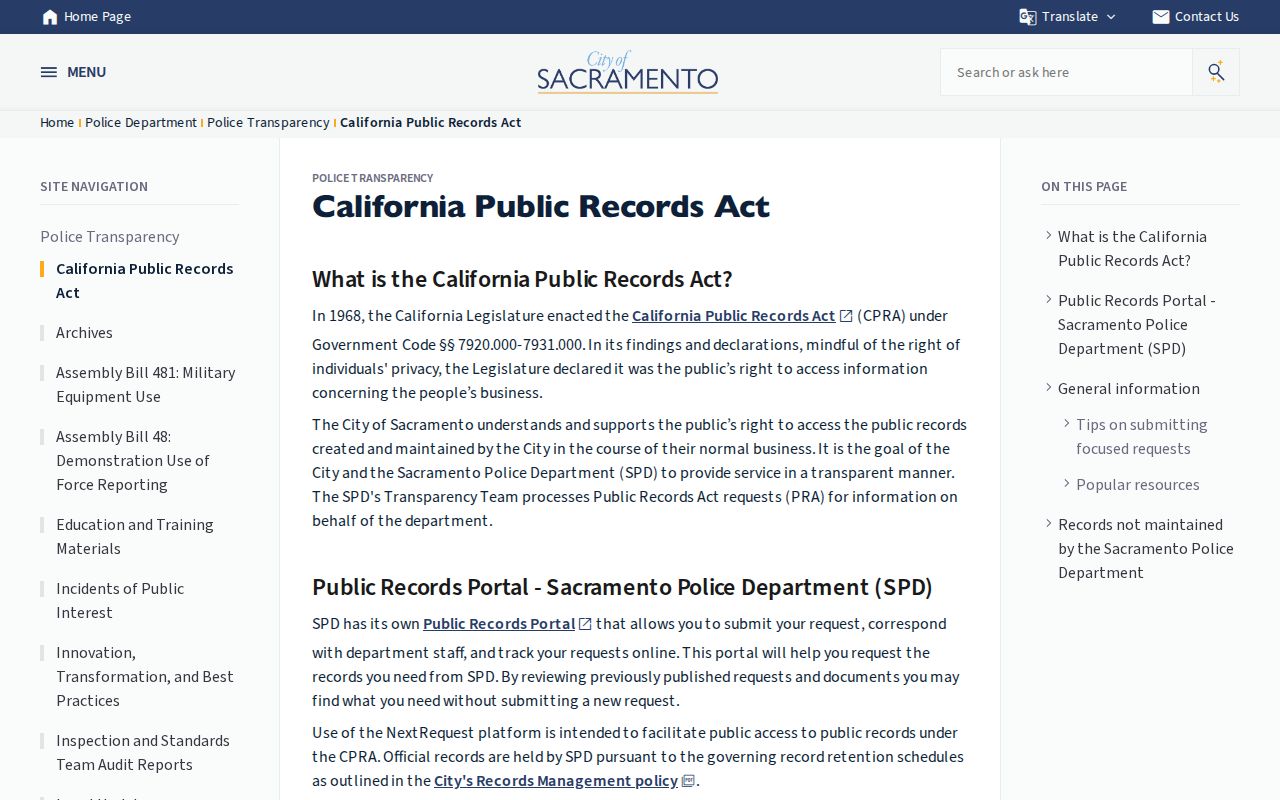
The city page makes the key boundary visible: SPD controls city police files, while the Sheriff and court control separate county records.
Sacramento Police Department Records
SPD records cover events handled by city officers, including releasable incident and crime reports. They are distinct from Sacramento County Sheriff's reports, warrant files, and jail records. The city has a dedicated police-report request route as well as NextRequest for broader public-record requests. SPD may redact victim data, private identifiers, investigative details, or other protected content. The Public Records Act provides access to existing records; it does not require the department to create a new analysis.
Use precise facts. Give the event date, location, report number, and record type if known. If an incident occurred outside SPD jurisdiction, identify the responding agency first. Sacramento County Sheriff patrol records, California Highway Patrol records, and SPD files do not merge at one city counter. That agency check prevents delay near jurisdiction lines and helps avoid mistaking a public map entry for the full police narrative.
Sacramento Police App Tools
The official Sacramento Police Department app provides tips, public-safety camera information, news releases, and agency updates. It is a communication tool, not an inmate, warrant, or complete records database. The city's mobile application directory identifies the official source.

The directory helps users distinguish the genuine Sacramento app from unrelated products and routes record requests back to the proper custodian.
The official Sacramento Police App Store listing shows the Apple distribution channel.
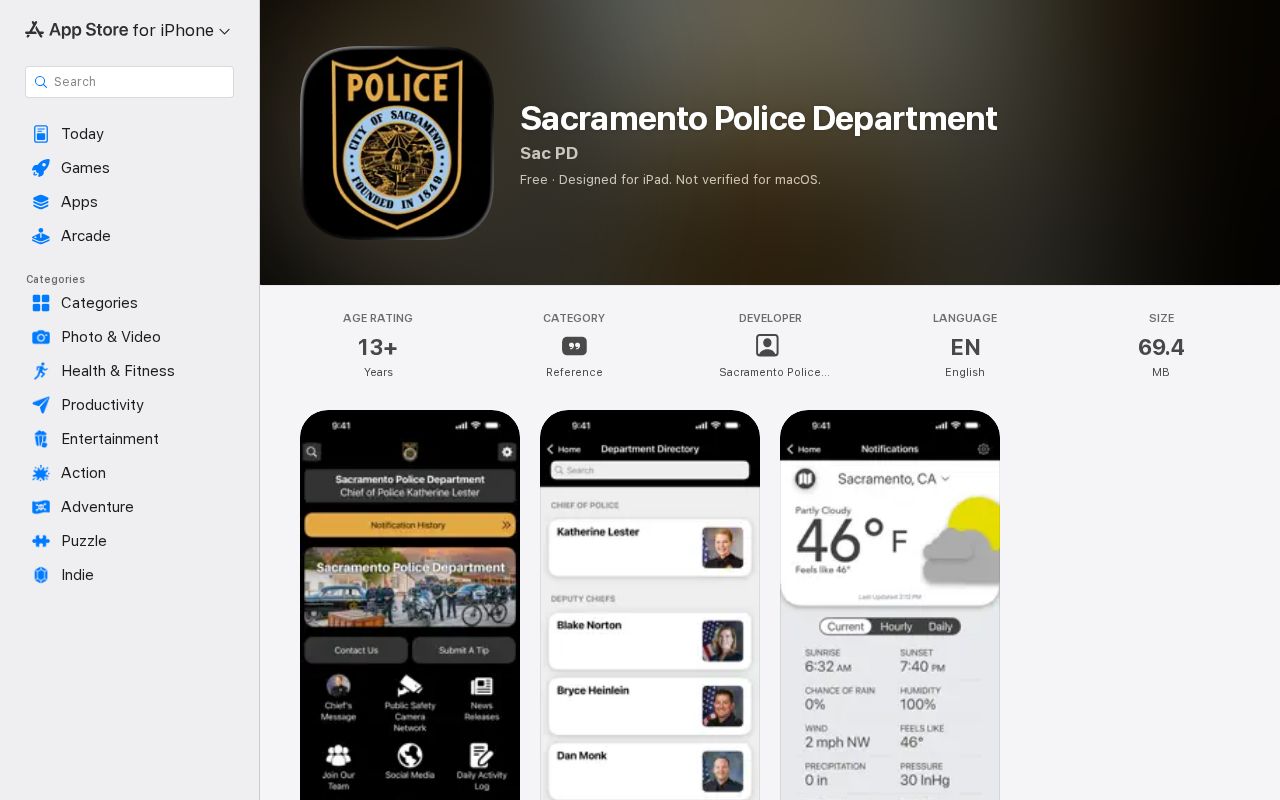
The Apple listing confirms that app functions are police communications, not a substitute for the records portal.
Android users can verify the same agency tool through the Sacramento Police Google Play listing.
That source keeps Android access tied to the official department product.
A tip submitted through the app is not a CPRA request. Use NextRequest for an existing SPD record. Use Sheriff channels for custody and warrants. Use the Superior Court portal for filed cases. Keeping these tasks separate prevents an app screen or press release from being treated as a certified criminal record.
Sacramento Arrests and Bookings
SPD arrests move into Sacramento County Sheriff's jail facilities rather than a separate Sacramento city jail lookup. The Sheriff's inmate system is therefore the right source for current custody and recent booking data. It supports name and XREF searches as well as recent-booking windows of 2, 4, 6, 12, or 24 hours. Detailed public data contracts after release, when the online display generally retains only release date and time.
The arrest report remains with SPD when city officers made the arrest. Booking data belongs to the Sheriff, and charges accepted for filing become a Superior Court case. These records can differ for valid reasons. Booking charges may change after review, and an arrest is not proof of guilt. The Sacramento County arrest lookup gives the county-level custody channels without turning the city record request into a general jail search.
Sacramento Public Safety Data
Sacramento Open Data offers public-safety datasets, but a dataset is not a report copy or court file. It may help show patterns, approximate locations, and agency activity without supplying protected narrative details. The Sheriff's LexisNexis Community Crime Map reflects Sheriff-reported events and should not be read as a complete map of incidents handled by SPD.
Ask what each source measures before drawing a conclusion. A map point may be generalized. A row may omit protected facts. A court portal entry may show filed activity but no arrest narrative. City data provides local context, while the original SPD report remains the source for the police account. The court alone controls its certified case copies.
Municipal Court Records in Sacramento
Sacramento has no separate municipal criminal court for ordinary city criminal history. California's unified trial-court system routes city misdemeanors and felonies to the Superior Court of California, County of Sacramento. Traffic and citation matters also use Superior Court traffic functions. Criminal Public Case Access covers Sacramento Superior Court filings from 1989 forward, but it cannot confirm identity through fingerprints and does not include other counties or federal courts.
| Court Name | Superior Court of California, County of Sacramento |
|---|---|
| Case Types Heard | Felonies, misdemeanors, and countywide traffic or citation matters |
| Case Lookup Channel | Criminal Public Case Access or the court public portal |
| What the Docket Shows | Case number, parties, events, hearings, disposition, and available documents |
| Copies & Fees | Criminal Records Unit; public name search is $15 if the case number is unknown |
Older criminal records require the clerk's microfiche or copy channels. A portal result is an index aid, not positive identification. Exact search criteria matter, and only the clerk can certify a court document.
Sacramento's Downtown Records Corridor
Several key offices sit close together downtown, yet each keeps a different file. The Criminal Records Unit is at 500 G Street. Main Jail and criminal pretrial departments at Lorenzo Patiño Hall of Justice are at 651 I Street. The District Attorney is at 901 G Street, and the Public Defender is at 700 H Street. Physical proximity does not merge their authority or records.
Use the clerk for filed case documents and certified copies. Ask SPD for its city police report. The District Attorney directs public case-status questions back to Superior Court Public Case Access. This division points readers to the office that can authenticate the exact item instead of sending the same request to each downtown building.
Where Sacramento Records Go
SPD creates the report and sends an arrested person into the county booking process. Prosecutors decide whether to file charges, and Sacramento Superior Court creates the case file after filing. Arrest and disposition information may also feed California's state summary criminal-history system under authorized reporting rules.
Record flow: Sacramento PD › Sacramento County Courts › California Department of Justice
Timing explains why one source may show activity before another. For a recent event, check SPD and Sheriff custody channels. For a filed charge or final outcome, use Superior Court. A person reviewing their own California summary record must use DOJ Record Review with Live Scan. The contributing agency, district attorney, or court supplies the authority needed for certain source-data corrections.
Sacramento Reports Versus Court Cases
A police report records what officers documented during an incident or investigation. It may contain allegations, witness accounts, property details, and investigative material, subject to redaction. A court case starts only if charges are filed. Its docket tracks arraignment, motions, pleas, trial events, disposition, and sentence. The two records are linked but not interchangeable.
If SPD has a report but the court search has no result, charges may not have been filed, indexing may lag, or the criteria may be too narrow. If a case appears, the police report still does not become a court-certified disposition. The Sacramento County criminal court cases page covers the formal docket and clerk copy routes.
Sacramento Capital Records Context
Sacramento is both the county seat and California capital, so city, county, state, and federal justice offices operate in the same urban core. That concentration can mislead a searcher into using the nearest office rather than the right custodian. An SPD incident does not become a California DOJ public name record, and a state or federal proceeding does not become a Sacramento city police file.
The U.S. Census Bureau's Sacramento QuickFacts supplies official city context.
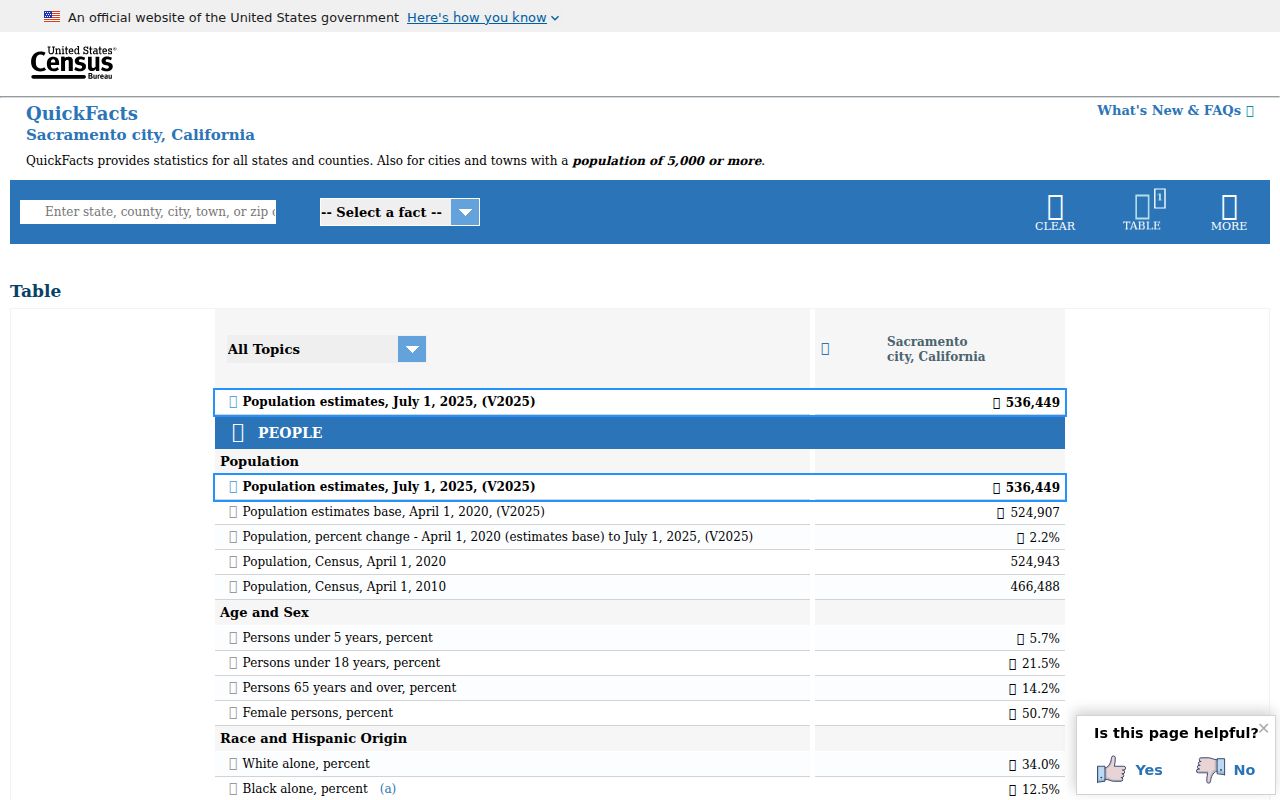
The census view identifies the city population layer without blurring city police jurisdiction into county or state records.
Match jurisdiction before searching. City officers create SPD reports. Sacramento Superior Court handles local state-law criminal cases. California DOJ maintains restricted state summary history. Federal cases belong to the U.S. District Court for the Eastern District of California and federal access systems. The city page stays focused on SPD and the direct county path.
Public Access Rules in Sacramento
The California Public Records Act creates a general right to inspect city agency records unless an exemption applies. It does not make every police or criminal-history item public. SPD can withhold or redact protected investigative, victim, juvenile, medical, and identifying information. Court files follow separate access and sealing rules. Local and state summary criminal history is restricted by dissemination statutes.
Key Statutes:
California Public Records Act, Government Code sections 7920.000-7931.000 - permits access to agency records unless an exemption applies.
Penal Code section 13300 - limits local summary criminal-history release.
Penal Code section 11105 - controls California DOJ criminal-history dissemination.
California Rules of Court, rule 2.550 and following - governs sealed court files and access.
Requesters should expect partial release when only part of a record is exempt. A denial or redaction does not mean no event occurred. It means the city applied a legal access rule to the material requested.